Author: Anya Mari

  • Anatomy of the Wolf

    Anatomy of the Wolf

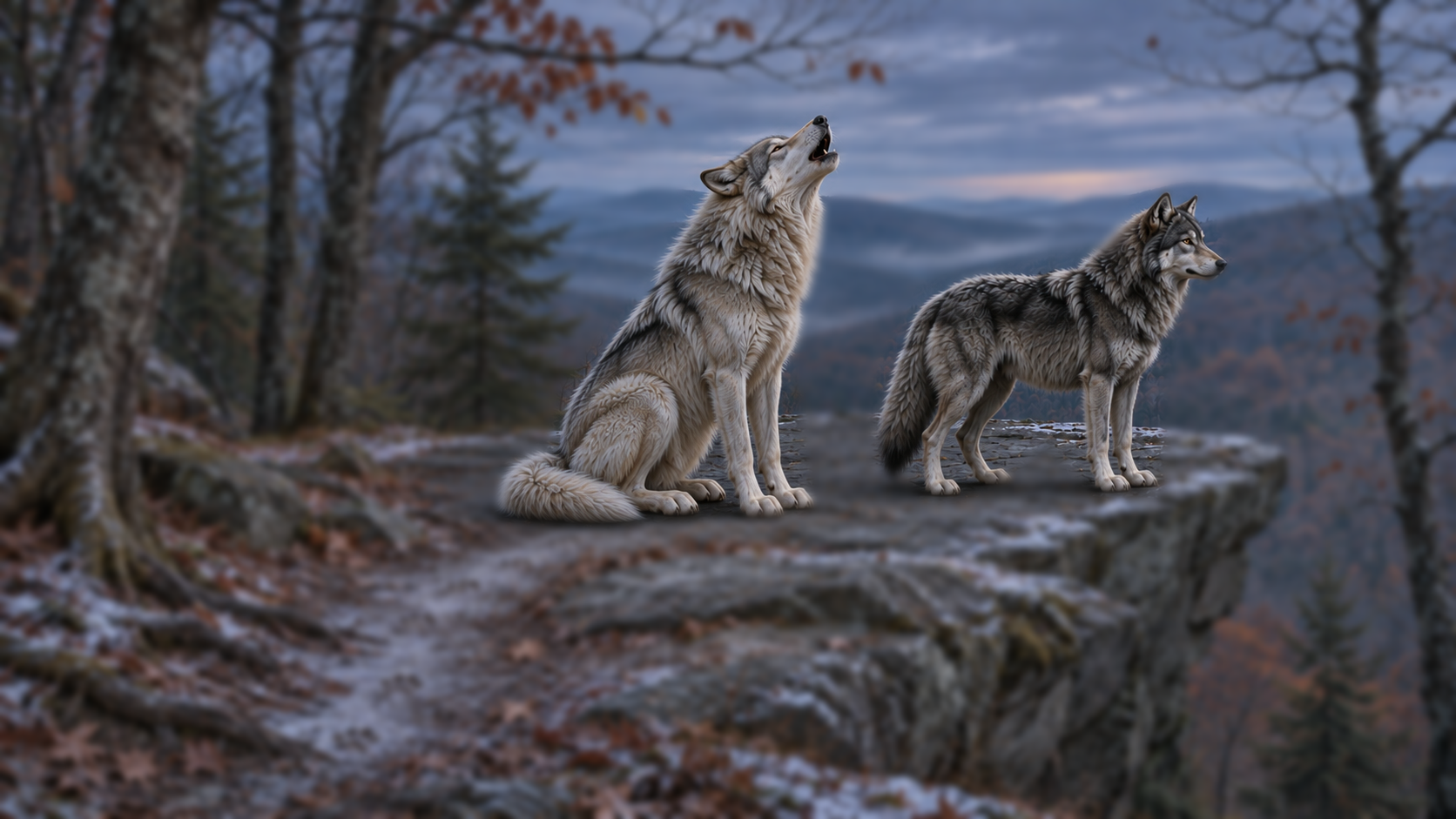
    The tension between wild freedom and pack loyalty is the core paradox of the wolf archetype across human history. Rather than opposing its independence, the wolf’s devotion to its circle makes that independence meaningful.

    Wolf archetypes are constantly changing, but the call of the wild and the desire for freedom reign supreme with me. Within the wolf’s circle, domestic loyalty gives freedom more importance, not less. You must break from society’s expectations and conformity to discover your inner strength. All cultures have a version of this.

    Wild freedom. Fierce devotion.

    What blows my mind? The alpha wolf is not even real.

    Not “scientists disagree.” Simply, it doesn’t exist. The idea came out of a debunked mid-twentieth-century study of captive wolves. Unrelated adults penned together, strangers forced into a yard, behaving the way strangers behave like Lord of the Flies when they cannot leave. Shocker. A dominance hierarchy formed, the way it forms in a prison. Researchers wrote it down and called it wolf nature. A classic misunderstanding based on treating animals as if they’re not sentient beings.

    L. David Mech put the word “alpha” into wide circulation with his 1970 book, and then spent decades taking it back. His long study of a wild pack on Ellesmere Island found something much less cinematic: a breeding pair and their offspring from the past two or three years. A family. The young leave at two or three to find mates of their own. Infighting is rare. Calling the breeding male an alpha, Mech has said, is like calling a human father the alpha male. He is just the dad.

    He has since asked his publisher to stop printing that 1970 book.

    In 1992 Clarissa Pinkola Estés published Women Who Run With the Wolves, and the archetype turned again, but this time inward. Her wolf is the instinct that hasn’t been domesticated: accurate intuition, boundaries held without apology, fierce devotion to your people while remaining entirely yourself.

    That last part is the dichotomous task we all must learn to survive the lives we lead, and it is the reason the wolf keeps working as a character engine. Belonging and freedom pull against each other. A pack costs you something. Independence costs you something else. Every wolf story is really an argument about which price the character is willing to pay.

    So, why do we crave the Alpha versus Omega story?

    Because the family is not a story and the hierarchy is.

    A pack with ranks gives you conflict, stakes, a ladder to climb and a throne to be knocked off. It gives you an alpha with the weight of everyone’s safety on his back, and an omega at the bottom who is either a victim or a rebel depending on who is telling it. That is a plot. Parents raising pups until they leave home is a life.

    At its core, the Alpha and Omega duality is just a mirror for the constant tug-of-war happening inside all of us. On one side, we have the Alpha urge to push forward, build things, and take charge, while on the other, the Omega calls us to slow down, feel deeply, and simply let things unfold. When we get stuck living in only one of these modes, we end up feeling strangely incomplete—either exhausted from fighting every current or adrift without a compass. That quiet ache is our craving for cosmic wholeness, balance, a desire to weave our boldest beginnings together with our deepest stillness until we feel entirely at home in the universe. But the reality is a lot more complicated.

    Maverick wolf: outrider with an untamed heart

    Before the wolf was a found family, it was a sentinel.

    The lone wolf invites readers to explore their rebel side. Take the teenager who did not fit—too strange, too quiet, too much. The lone wolf reframes that. It turns exclusion into election. You were not rejected; you were never meant for the pack in the first place. That is a powerful thing to hand a fifteen-year-old, and it is why the trope refuses to die no matter how many biologists explain it.

    In early Germanic law the same word covered wolf and outlaw. To be named one was to be stripped of protection and put outside the walls, where anyone could kill you without consequence. The lone wolf was not a particular creature anomaly, so much as a status: you are no longer ours.

    Norse myth took it further. Fenrir, Loki’s monstrous son, waits in his chains to devour Odin at Ragnarök. The sky-wolves Sköll and Hati run after the sun and the moon and will one day catch them. Odin himself keeps two wolves, Geri and Freki, whose names mean roughly the ravenous and the greedy—the battlefield’s appetite, sitting at the feet of the god.

    That is the wolf as devourer: hunger that eventually eats the light. The root of the question, “which wolf do you feed?”

    Primal wolf: the one who nursed Rome

    And then, from the same era of human imagination, the exact opposite.

    Lupa, the she-wolf, found two abandoned infants and fed them, and in doing so founded a city. Rome’s origin story asks us to believe that the empire’s ferocity came from her milk—that being raised by a predator is what made the founders strong.

    Same animal. One tradition makes it the end of the world; another makes it the beginning of a civilization. The wolf has never had a fixed meaning. It has only ever had a job: to carry whatever we cannot say plainly about appetite, loyalty, and who belongs.

    The wild self in a gilded cage: Four books, a dichotomy of wolf personae

    A few novels on my shelf pull on different aspects of the wolf persona, and none of them needs a full moon.

    The Wolf Den — Elodie Harper

    Amara was a doctor’s daughter in Greece before poverty and enslavement brought her to a brothel in Pompeii. Her intelligence has not disappeared because the world has decided what she is worth. Among the other women, she finds friendship, shared hopes, and moments of relief inside a life controlled by someone else.

    Here the pack is a way to survive. Sisterhood offers shelter, but freedom has a price, and wanting a way out can strain the bonds that make endurance possible. The wolf image turns toward women whom society exploits and then judges for the conditions it has forced upon them.

    In The Wolf Den, Elodie Harper gives us women who have every reason to bare their teeth. Amara has her wits, and the women around her have each other—sometimes that is all they have. But wanting freedom and finding a way to claim it are very different things. What happens when the way out puts the people who helped you survive at risk?

    Wolf on a String — Benjamin Black

    Benjamin Black, John Banville’s crime-writing name, takes us to Prague and the court of Rudolf II. A young scholar, Christian Stern, encounters a murdered woman and is drawn into a world of court intrigue. Curiosity brings him closer to power, but power doesn’t guarantee safety.

    This is the wolf in human company: watchful, calculating, difficult to identify until you are already within reach. Beside Harper’s women finding strength together, this court offers a different kind of enclosure. Being admitted does not mean belonging. Be careful of flying too close to the flame. Trust no one.

    Prague feels right for this story. It is a city with a long history of fighting for freedom, from the Hussite Wars to the Velvet Revolution. But in Rudolf II’s court, you learn to watch what you say and who might be listening. I love the contrast: all that velvet and alchemy, and underneath it, the fear of being yourself.

    For the Wolf — Hannah Whitten

    Red is the second daughter, intended as a sacrifice to the Wolf in the Wilderwood. She goes carrying a dangerous power of her own. The legend has prepared her for a monster, but the Wolf is a man, and the forest holds dangers her upbringing has not taught her to understand.

    Societies often build mental cages through fear-driven myths, labeling untamed power “monstrous” to enforce conformity. Like Red leaving civilization to claim her magic and chosen loyalty, readers embrace books about antiheroes and villains as a quiet rebellion against rigid norms. These “monsters” shapeshift in our minds—evolving from frightening threats into relatable mirrors of our own suppressed strength, reminding us that breaking the rules is sometimes how we finally become ourselves.

    The question changes as the person behind the name comes into view. Who benefits when someone is called a monster? What happens when fear gives way to understanding—and then desire? Here, the beast breaks past the confines of the legend to become the beloved.

    The first three novels offer different pressures: surviving together, navigating predatory power, and discovering who lives behind a frightening name. None needs a literal wolf pack to ask who belongs, who hunts, and who gets called dangerous. Across all three books, the wolf evolves: in The Wolf Den, the pack helps you endure a cage; in Wolf on a String, society puts the wolf on a leash; and in For the Wolf, stepping into the wild reveals that the “monster” was never the wolf—it was the society demanding your conformity.

    Darkly Dreaming Dexter: Predator with a code

    We explored his killer instinct in Thrill of the Kill, but Dexter embodies the vigilante justice of the lone wolf better than most antiheroes. Dexter brings the philosophical question of “which wolf do we feed?” into contemporary crime fiction. A killer who targets other killers, he channels his appetite through a code and hides it inside an apparently ordinary life. We are invited to follow the hunter because we know what his targets have done.

    That makes him useful here as a human version of the predator we want to believe we can understand. His code offers a boundary; it does not make him harmless. Is he mastering his nature, finding an outlet for it, or giving himself permission? The discomfort is part of why we keep watching.

    Dexter has Harry’s Code to keep his teeth away from the wrong throats. Mostly. We know what he is, yet we find ourselves hoping he gets away with it. His victims have done terrible things, and that makes it easier to excuse what he does to them. I’m always curious about that moment when I start making exceptions for someone I would be terrified to meet.

    What the wolf teaches about building characters

    Strip the fur off and you have a pressure system any character can be dropped into.

    • A group that offers safety at the cost of privacy
    • A hierarchy that may be fictional but, believed in, is real enough to hurt
    • An exile who has reframed being cast out as having chosen to leave
    • An instinct the character can neither remove nor fully trust
    • A vigilante constantly battling inner demons

    None of that requires a full moon. It is high school. It is a family. It is any workplace you have ever chosen to sever connection with. It’s the life you choose to keep, or end.

    Primal instinct. Chosen loyalty.

    The wolf we invented was ranked, dominant, fighting for the top. This says more about human drives than about any animal in a forest. The real one turns out to be a parent with a couple of yearlings trailing behind, teaching them to hunt before they go.

    And then they go out into the wilderness, on their own quest for survival. And a mate. They must follow or build their own code. Find a family to join, a society, or start one. The decision about how much conformity a soul craves varies from one being to the next. So too the decision of how big is our circle, how strong our allegiance.

    A tender heart with sharp teeth. It was never a contradiction. That is just what it costs to protect something.

    Imprinting: when the wolf falls in love

    There is one more wolf, and it is the one romance readers argue about at midnight.

    Twilight’s supernatural imprinting takes the fantasy of an absolute bond and turns it into fate. The bond chooses before the character can, shaping what that person becomes to the other: protector, companion, or eventually a partner. This is a fictional mechanism, not the way real wolves form attachments, and it is separate from the developing romance in For the Wolf. Some readers find that certainty deeply romantic. Others find the loss of choice unsettling. The tension belongs here.

    Because devotion to another makes us vulnerable, that absolute is never only tender. A love that would do anything to protect you is a love that would do anything. Somewhere in that sentence, the heart and the teeth stop being opposites and start being the same thing.

    That is where we go next: the place where desire and death sit down at the same table.

    Next: Eros & Thanatos—the dark side of love.

    If you’d like more from the Night Scribe, subscribe below. It arrives in your inbox regularly with new publications.

    So come in from the cold, sit back, and enjoy the reel.

    Sources

    L. David Mech on the alpha wolf, captive vs. wild packs, and the Ellesmere Island study: Scientific American, “Is the Alpha Wolf Idea a Myth?” — scientificamerican.com

    Elodie Harper, The Wolf Den: hachettebookgroup.com

    Benjamin Black, Wolf on a String: macmillan.com

    Hannah Whitten, For the Wolf: hachettebookgroup.com

    Dexter and the Code of Harry: paramountplus.com
  • Thrill of the Kill: True Crime Meets Horror Fiction

    Thrill of the Kill: True Crime Meets Horror Fiction

    This is more than something that goes bump in the night. This is riding around in the mind of a serial killer—or the person running from one. True crime meets horrifically thrilling fiction.

    Watch the episode: Thrill of the Kill

    The Dark Passenger & the Warren Museum

    Dexter calls it his Dark Passenger. I think of it as a little seed of darkness, something fiction lets me turn over and examine. What does a character do with it? How far will they go, and what will they tell themselves afterward?

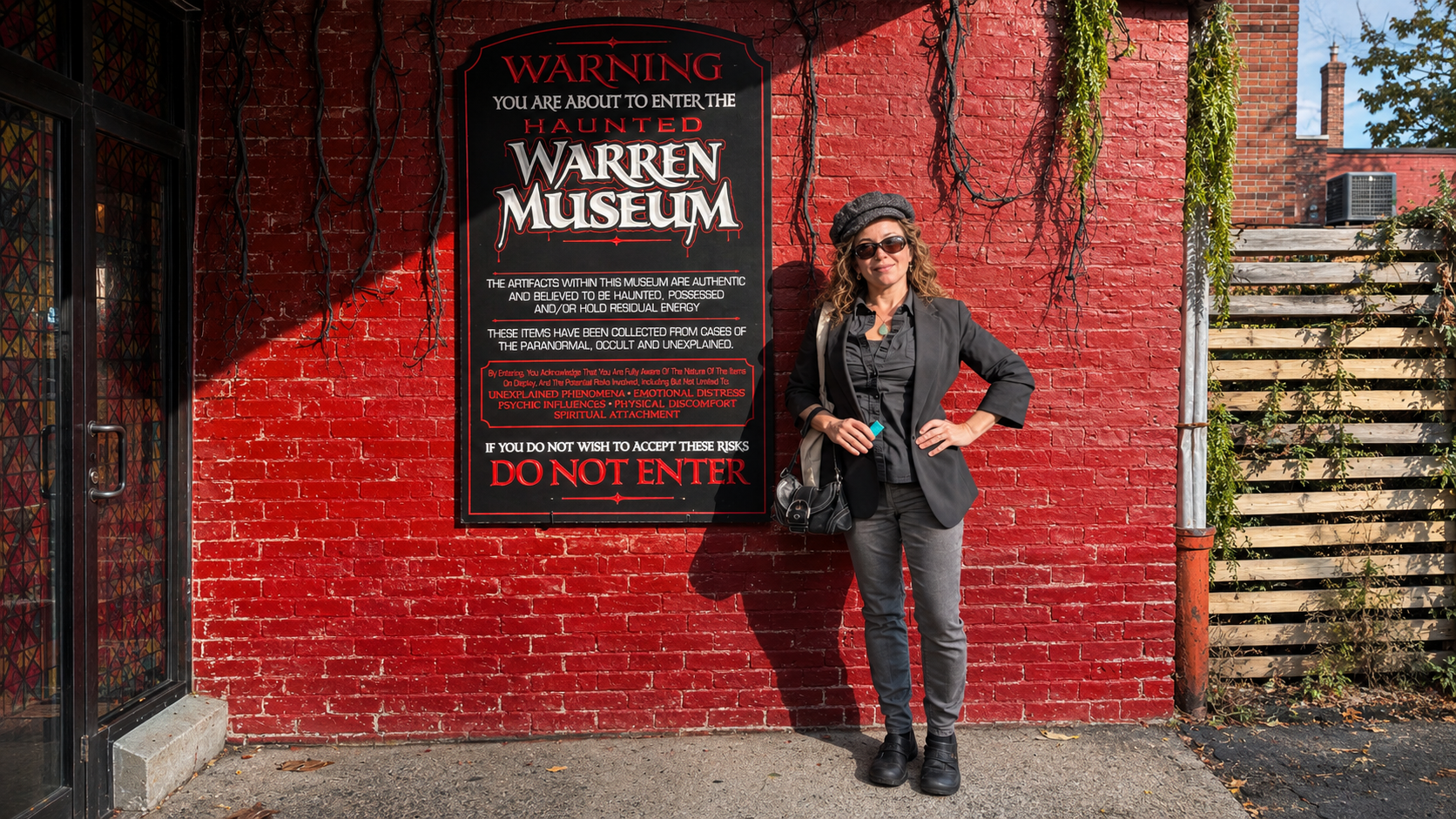
    Last month I took a little trip to the Haunted Warren Museum at 259 Essex Street in Salem, Massachusetts. It’s a limited-run exhibition of more than a thousand paranormal relics and true-crime items—serial killers’ belongings alongside haunted dolls like the real Annabelle—with tickets ranging from flashlight tours to VIP and paranormal investigation packages. I went with the $60 flashlight tour. (Filming wasn’t allowed, so the visuals you see here come from elsewhere.)

    I was in and out in less than half an hour. Being in there, I went from claustrophobic to nauseous. I had paid all that money to help memorialize killers.

    My reaction was to focus on the victims. I’ll get to them in a minute. But first, let’s take a deeper look at Dexter, the notorious fictional antihero who kills villains.

    Dexter and the Feedback Loop

    The line between true crime and fiction blurs from both directions. True-crime writers borrow the techniques of novelists. Worse, sensational media coverage can create a feedback loop in which real criminals model their identities, or their methods, on famous fictional archetypes.

    Jeff Lindsay’s 2004 novel Darkly Dreaming Dexter and the Showtime series starring Michael C. Hall are a textbook case of both. The franchise didn’t just absorb the real world into its fiction. It bled back out into reality.

    From a Luncheon to Forensic Realism

    Jeff Lindsay didn’t set out to write true crime. He told NBC Miami the idea came to him while giving a talk at a Kiwanis Club luncheon. Looking out over a room of “real estate agents, insurance agents and other assorted shills and hucksters,” he recalled, “the idea popped in my head from nowhere that serial murder is not always a bad thing.”

    To ground that pitch-black concept, the books and the show leaned on real-world detail:

    • The forensic mask. Dexter isn’t a supernatural entity or a chaotic, disorganized monster. He’s a blood-spatter analyst for Miami Metro Police, and the story anchors him in meticulous, clinical forensic science borrowed from real procedure.
    • Real-life parallels. Life supplied its own echoes. Brazil’s Pedro Rodrigues Filho, who claimed to target other criminals, was later nicknamed the “Brazilian Dexter.”

    When Fiction Becomes a Blueprint

    The dark side of this blending is that Dexter’s logical, forensic, highly organized “Code” became a blueprint for real copycats, who modeled their identities, aesthetic choices, and methods on Dexter Morgan.

    • 2008, Edmonton, Alberta. Filmmaker Mark Twitchell rented a garage and recreated Dexter’s plastic-sheeted kill room. He lured Johnny Altinger there through a fake online dating profile, murdered him, and wrote about it in a laptop document titled “SK Confessions.” Twitchell was convicted of first-degree murder in 2011.
    • 2026, the West Midlands, England. Benjamin Day, a 20-year-old forensics student obsessed with the show, lined a rented Airbnb with plastic sheeting and murdered 24-year-old Maria Saceanu. He was arrested wearing a Dexter-style khaki top. In October he pleaded guilty to murder; his sentencing is set for December 4.

    The loop closes here. Real forensic protocols inspired a fictional “hero.” The fiction stylized and romanticized murder. Real killers then consumed that fiction as an instruction manual, and true crime had to document them all over again.

    And yet Dexter remains iconic. That’s the uncomfortable part: on the page, it’s hard not to love him. Spending time in a killer’s head means listening to the way he makes killing sound reasonable—and his dark humor makes it a strange place to find yourself entertained.

    The Housemaid — Freida McFadden

    Like Dexter, Millie tells her own story, and she brings the reader uncomfortably close.

    Millie needs the job the Winchesters offer her. She has a criminal record, few options, and good reasons to put up with more than she should. Inside their home, keeping the peace becomes increasingly difficult. Beside Dexter’s account of himself, it makes an uneasy pairing: Millie has to read other people’s behavior while depending on them for a roof over her head.

    Spoiler alert: this victim turns the tables, which makes her an antihero, too—another killer of villains.

    Tropes Over True Crime

    Where Dexter blended real forensic profiling and killers’ methods into its story, The Housemaid borrows from other thrillers. Its beats will feel familiar to readers of domestic suspense like The Last Mrs. Parrish: an attic bedroom door that locks only from the outside, elaborate gaslighting schemes. It plays out as a high-drama popcorn thriller, not a forensic guide. It centers on survival, domestic abuse, and sudden defensive retaliation, with no systematic method or romanticized killer identity for a copycat to latch onto. Dexter invited the real world in. The Housemaid stays a sealed, fictional thrill ride.

    McFadden kept her own double life just as contained. In April 2026, after years behind the pen name, she revealed that she is Dr. Sara Cohen, a physician who treats brain disorders. For more than a decade she kept her medical career and her writing identity strictly separate.

    Some readers find her twists a little too familiar. To my mind, that’s beside the point: she sets out to deliver extremely well-constructed entertainment, and she does it with a high degree of professionalism. If being prolific is a crime, then I’m guilty too—I just haven’t published yet. Writing as a second career gives a person time to create worlds and refine them. And when a woman is as smart and savvy as Virginia Woolf and makes a room of her own, on her own terms, there’s certainly room for prolific storytelling. It just happens.

    Beyond the Killers: The Survivors

    Deadly intention is frightening enough. Being allowed to hear the reasoning behind it can be worse—or better, depending on what kind of media you consume. And then there are the people trying to survive, who don’t get to read the next chapter and find out who they should have been afraid of.

    Exploring the dark, abnormal psychology the human mind is capable of is one of those things most safely done as a reader. Writing it is a whole new level.

    Bright Young Women — Jessica Knoll

    In 1978, Pamela Schumacher survives an attack on her sorority house. Tina Cannon believes the same man is responsible for the disappearance of Ruth, the woman she loved. Their search for answers brings them together.

    Inspired by Ted Bundy’s crimes, Knoll’s novel never names him. Instead, it gives the women whose lives the violence changed the attention usually lavished on the killer: their grief, their relationships, their pursuit of justice. In a genre so often fascinated by the man behind the violence, that’s a welcome shift, and it belongs in any conversation about our fascination with killers.

    The Crying Killer — Jess Lourey

    This one arrived in August. Tuesday Hendrickson has spent eight years trying to build a life after her sister’s murder. The killer was believed dead. Now Tuesday thinks she has seen him in Saint Paul.

    She’s a private investigator with a daughter to protect, and the possibility that he’s alive reaches straight into the life she has made. Lourey draws on true crime and brings a personal stake to familiar serial-killer territory: a survivor protecting the life she rebuilt when the danger she thought was buried appears to return.

    When the Book Is Closed

    The door can be locked, the house quiet, and a story can still get under your skin. We’ve spent hours listening to someone justify a murder, or watching another person try to survive one. Whose head would you rather ride around in: the killer’s or the survivor’s? Tell me which book put you there.

    Now that we’ve crossed the threshold into the dark half of the year, we’ll pivot from the mundane to the morbid and keep investigating the darker side of the human soul. Stay tuned for a deeper dive in next week’s episode: Anatomy of a Wolf.

    I’m always pulled toward the newest adventure, the next cycle. I don’t like regurgitating old processes over and over—writing, editing, or reading the same tripe. I want it raw and real. Don’t you?

    If you’d like more from the Night Scribe, subscribe below. It arrives in your inbox regularly with new publications.

    So come in from the cold, sit back, and enjoy the reel.

  • Dead Souls: The Light Still Shines

    Dead Souls: The Light Still Shines

    The dead have a way of staying near. A recipe, a coat still on its hook, a song that comes on in the car. Sometimes a place feels occupied long after whoever lived there is gone.

    Watch the episode: Dead Souls

    With Día de los Muertos here, I’ve been thinking about that nearness. The Mexican tradition welcomes the dead home with offerings and remembrance. It shares these early November days with All Saints’ Day and All Souls’ Day, though each has its own history. There are so many ways of keeping company with the dead.

    I found myself writing from the other side of that company in my writers’ group this week. A little something for the restless ones who never quite leave:

    Here & There

    I lived. Here, the worms skitter between my ribcage and spinal cord. There, it was warm and light even in the dark of night. Food appeared in its place. If it didn’t, I knew whose bedside to warm. Or in whose ears to caterwaul until things got made right. Jumping between porch rails and dried broken vines, the trail between the swirling waters and the home fires grew longer and harder to traverse. Trees got taller, gardens grew thick with weeds. Eventually I found myself here in the damp earth. I’m hoping my spirit goes before the winter snows, but the light still shines from the hearth where I lived.

    That last light is where I want to linger. There’s a home within sight, and a creature still trying to leave. I can follow that feeling into a ghost story, or into a book with no ghosts at all.

    What do we mean by a soul?

    What happens to a soul when someone dies can start an argument as quickly as religion or politics. Fiction gives us room to wonder. We can pretend a soul has weight, that someone can steal it, or that a person can get along perfectly well without one. Then we have to live with the consequences for a few hundred pages.

    Vampires, witches, and creatures caught somewhere between the living and the dead make good company for these questions. So do ordinary people trying to work out where they belong. These three books take me in very different directions.

    Soulless — Gail Carriger

    Alexia Tarabotti has no soul. In Carriger’s supernatural Victorian London, that comes with a useful complication: her touch cancels supernatural powers. An encounter with a vampire draws her into a mystery involving London’s vampires and werewolves, with Lord Maccon investigating and social etiquette getting in the way.

    “Soulless” is usually an accusation. In this book, the condition pairs Alexia’s logic with Lord Maccon’s beastly passion, perfectly embodying dark gothic romance amidst steampunk machinery and mystical aristocrats. Having no soul strips away supernatural grace, grounding her in absolute mortality.

    On this day honoring the dead, her condition reminds us that life is defined by our internal spark; without it, we walk between existence and the permanent quiet of the grave.

    Secondhand Souls — Christopher Moore

    With Christopher Moore, I expect his raunchy brand of humor to follow us into the afterlife—with a little killing on the side, for fun. Secondhand Souls returns to the San Francisco of A Dirty Job, where the work of collecting souls has gone badly wrong and souls are disappearing.

    Giving souls somewhere to go means someone has to mind them on the way. Leave that job to Moore’s characters and there’s going to be trouble. Sometimes a little levity on a serious subject opens doors to let emotions pass more easily. After all, we all cross the river. Comedy defangs the terrifying finality of death. By replacing solemn mourning with absurd supernatural antics, his humor allows readers to put it in perspective.

    The Feast of All Saints — Anne Rice

    All Saints’ Day brings Anne Rice’s title to mind, and with it New Orleans—a city with more than enough history to keep my imagination occupied, where it’s easy to feel the veil of our connection to the world beyond the living slip. The connection to Día de los Muertos is one I’m making here; the novel tells a different story.

    The Feast of All Saints follows free people of color in the 1840s, living within a society that sharply limits their choices. In New Orleans, social upheaval blurs the boundaries of life and death. The raw ache of forbidden plaçage entanglements and the ghosts in The Feast of All Saints brought love tears, while the cold, stone tombs of the crescent city and its evocative ambiance left me both thrilled and chilled to the bone.

    The light still shines

    A character doesn’t need to be good to have a soul. I’m obsessed with what happens when affection and selfishness live in the same person, when someone causes harm and still has someone waiting for them at home. There’s plenty to haunt a reader in the grey matter between the living eardrums and eyeballs. When the seasonal darkness draws us toward preternatural considerations of what lies beyond the grave, the results of these stories evoke a heightened emotion. Light and shadow play tricks on me. Maybe it just depends on which wolf you feed?

    As the nights get longer and the days get shorter, I dive deep into the page, alongside the pets, a roaring fire, and a cup of warm tea. I keep coming back to that imprint in my mind, of a small creature in the earth, looking toward the hearth. The light is still there. Leaving is the hard part.

    Which fictional soul has stayed with you long after the last page? I’d love to know whose story you’re still carrying.

    The Night Scribe arrives regularly with more stories and reading company. Subscribe at anyamaribooks.substack.com. Come in from the cold.

    Next: Thrill of the Kill: True Crime Meets Horror Fiction.

  • The Anatomy of a Witch

    The Anatomy of a Witch

    What happens when a heroine refuses to behave or fall in line with traditional expectations of her community?

    Anya Mari—Character, story, and the beautiful trouble of being human

    Every October, the season of Samhain invites reflection, and my deepest pondering of character analysis this year is fixated on the craft. Pagans and colonials alike called these healers and seers witches. As a writer, I’m fixated on the heroine’s journey and the anti-hero character analysis.

    At Halloween, witches turn up on book covers and in shop windows, on television, and in costume aisles, in stories about women who live at the edge of town and know too much, want too much, love too fiercely, or simply will not stay inside the role someone else wrote for them.

    This year they have company. The Owens sisters are back—Practical Magic 2 arrived in US cinemas on September 10, 2026, directed by Susanne Bier and drawn from The Book of Magic, Alice Hoffman’s final novel in the series, with Sandra Bullock and Nicole Kidman returning nearly three decades after the first film.

    Which makes this a magical season to ask a question that has almost nothing to do with cauldrons:

    Why do we keep making witches out of women?

    And the better question underneath it: what happens when the witch is the heroine?

    The heroine’s journey is not the hero’s journey in a dress

    The familiar hero’s journey runs on departure, trials, confrontation, transformation and return. Maureen Murdock wrote The Heroine’s Journey partly in response to that model, arguing that a woman’s psychological journey in a culture built on masculine definitions of success could not simply be mapped onto it. Her version begins with separation from the feminine, moves through achievement on borrowed terms, and then descends—into a reckoning that has to happen before anything like wholeness is possible.

    I don’t think every story about a woman has to follow that shape. I certainly don’t think every heroine needs to arrive at the last chapter healed and emblematic.

    The opposite, really. The heroines worth reading are the ones who don’t resolve neatly. They want incompatible things. They have virtues that turn into liabilities and flaws that occasionally save them. And often the society around them is so invested in what a woman should be that the very qualities making her compelling become the evidence against her.

    Which is where the witch comes in.

    The witch has always been a problem of perspective

    “Witch” has never been a neutral word. European witch-hunting intensified through the late medieval and early modern periods; tens of thousands of people were executed on accusations of witchcraft, and the overwhelming majority of the accused were women. Salem was one American episode in a much wider Atlantic history of fear, religious anxiety and local grievance.

    The pointed hat and the broomstick came later. The Halloween witch is a costume assembled over centuries, not a portrait of anyone who actually stood trial.

    But stories are very good at turning historical fear into metaphor, and the witch turned out to be an unusually useful one. She could stand for forbidden knowledge, or sexuality, or independence, or old age, or healing, or revenge, or the refusal to marry, or the simple terrifying possibility that a woman might know something nobody else could control.

    That makes her close to a perfect subject for the heroine’s journey. Change the narrator, and the witch changes with it.

    Three books on my desk this month make the point better than I can.

    Myths and Magical…Realism

    There’s an older argument hiding inside the witch, and it isn’t about spells.

    Magic has long served as an allegory for intuition—specifically, for a way of knowing that doesn’t show its work. Intuition appears to skip the steps because it runs on fast, subconscious pattern recognition: a lifetime of noticed detail arriving as a conclusion before the reasoning catches up. The knowledge is real. The audit trail isn’t.

    That’s a problem for systems built to verify. Empirical frameworks—historically male, now increasingly machine—have a structural blind spot where conclusions arrive without visible data points. Faced with a woman who was right and can’t say why, a system that cannot reverse-engineer her reasoning has three options: accept the conclusion, dismiss her, or reclassify what she did as something other than thinking.

    Calling it supernatural is the third option. It’s a tidy move, because it does two jobs at once. It explains the unexplainable, and it removes her knowing from the category of legitimate knowledge, where it might have to be taken seriously.

    Which is why “she’s a witch” and “she’s intuitive” and “she’s difficult” have always been closer to one another than they look. Each one answers the same inconvenience: a woman who knows something the available instruments can’t account for.

    This is also, I think, why magical realism works as well as it does. It doesn’t ask whether the magic is real. It treats the unquantifiable as simply part of the furniture of life—which is much closer to how most people actually experience knowing things.

    Quantum Mysticism

    Now let me argue the other side, because I can hear it coming.

    Fritjof Capra’s The Tao of Physics (1975) drew parallels between modern physics and Eastern philosophy, and the idea has been reaching for mysticism ever since. David Bohm used the hologram as an image of wholeness: cut a holographic plate into pieces and each piece still contains the whole image, only dimmer. It echoes Indra’s Net, that endless web of jewels in Hindu and Buddhist thought, each one reflecting all the others. Reality as relationship rather than as a collection of separate things.

    It’s beautiful, and it is tempting to run it further—to say that physics has finally caught up with the intuitive, that consciousness and energy and healing are vindicated at the subatomic level.

    But these are philosophical parallels, not proofs. Quantum mechanics does not explain intuition, and it certainly doesn’t validate anybody’s crystals.

    Still, I notice that both the witch and the physicist are describing a world where everything is connected and the parts contain the whole.

    But that’s a subject for another story.

    Margarita: the witch who says yes

    Mikhail Bulgakov wrote The Master and Margarita under Stalin, and it could not be published in his lifetime. The Devil arrives in Moscow with an entourage that includes an enormous talking black cat, and proceeds to take the literary establishment apart.

    And then there is Margarita, who does something I find endlessly interesting. She is offered the chance to become a witch, and she accepts. She flies. She wrecks the apartment of the critic who destroyed the Master. She hosts Satan’s ball.

    But the power isn’t the point. When Woland offers her a reward, she doesn’t ask for wealth or safety or even, at first, for the Master. She asks for mercy for Frieda—a woman condemned to be handed, every morning, the handkerchief she used to smother her own child.

    Her transformation doesn’t make Margarita good. It makes her able to act on what she already believed.

    That distinction matters when you’re building a character. Magic doesn’t create Margarita. It reveals her.

    Diana Bishop: the witch who says no

    Deborah Harkness turns the story inside out. When we meet Diana Bishop in A Discovery of Witches she is already powerful. She just doesn’t want to be. She is a historian of science at Oxford who has put careful distance between herself and her inheritance, and it takes an enchanted manuscript to drag her back.

    Her problem isn’t discovering she’s a witch. It’s discovering why she has spent so much energy not being one.

    Scholarship is an identity she controls. Magic is older, less predictable, and tangled up with a family history she would rather keep in a box. So the threat becomes internal as much as external: what happens when the part of yourself you rejected turns out to be load-bearing?

    The witch here isn’t the woman society cast out. She’s the woman who learned to cast herself out—which is, if we’re honest, the more common version.

    Maria Owens: the witch who inherits the wound

    If Harkness asks what happens when a woman suppresses her inheritance, Alice Hoffman’s Magic Lessons asks where that inheritance came from. The novel goes back to the 1600s and follows Maria Owens from her abandonment as an infant in England, through her education in what Hoffman calls the Nameless Art, to Salem and the curse that follows the Owens women down the centuries.

    Hoffman isn’t really writing about magic. She’s writing about what travels alongside it: love, betrayal, loneliness, kindness, and the way one generation’s wound becomes the next generation’s mythology. She has said the question underneath the book was how people who have been badly hurt manage to open their hearts again.

    That’s a long way from the Halloween caricature. This witch isn’t a woman with powers. She’s a woman working out what the powers cost.

    Three witches, three relationships to power

    Put them side by side and a shape appears.

    For Margarita, power is liberation—she steps into the forbidden world and finds she can finally act. For Diana, power is identity—she has to stop running from the part of herself she was taught to fear. For Maria, power is inheritance—what she passes on isn’t only magic but the consequences of love and betrayal and choice.

    Three women, three answers, one question underneath all of them: who does a woman become when she is finally allowed to act on her own compass?

    That question is much larger than witchcraft. That question is character.

    What I’m actually building here

    I’ve been working with a deliberately plain framework for character. Not because characters are simple—because they aren’t, and the complicated ones need somewhere to start.

    A believable woman on the page needs more than a backstory and an adjective. She needs values and beliefs, if not intuitive gut hunches, and desires. Ohh so many desires. Flaws that are load-bearing rather than decorative. Contradictions she hasn’t resolved. An inner compass that may not point where her society points. And, above all, she needs to own her power because choices make consequences, consequences make change, and change is the only thing that actually reveals who someone is.

    That’s the anatomy of a heroine. Not whether she is strong. Not whether she is likeable. Not whether she chose correctly. Only whether I understand why she chose what she chose.

    Perfect heroines bore me. Give me the complicated ones.

    And witches are complicated by construction. She heals and she harms. She nurtures and she destroys. She loves deeply and makes terrible decisions. She can be the woman everyone fears and the woman everyone visits when they have run out of other doors. That’s character gold.

    Why’s October the right time to ask?

    The modern witch is comically far from the women who were actually accused. She’s smart, fun, elegant, clumsy yet gothic, relatable and always sublimely powerful. A hard combo to pull off, but well hey she’s a witch. She flies through the night in a sexy dress and we love her for it.

    Maybe that’s why she survived. We took a figure invented to express fear of women and turned her into someone we want to dress as.

    But I don’t think we keep watching because we want to see spells. I think we recognize her. The woman who was told she was too much; a.k.a. too strange, too ambitious, too clever, too angry, too old, too contrary, too unwilling to forgive or forget or behave.

    The witch is simply the oldest name we have for a woman who won’t fit comfortably inside somebody else’s story. And she stops being frightening the moment you let her narrate.

    So let’s revisit the dark forest

    Over the next several weeks I’m going to take these ideas apart. Dismantle the contradictions and misconceptions. What a heroine actually believes, and how you’d know. Where her deepest vulnerability comes from, and why it’s usually hiding inside the thing she treasures. Why contradictions make a character legible rather than confusing. How the people around her reveal her. What her choices cost. And what it means to have integrity when nobody is watching.

    Margarita, Diana and Maria will keep coming back, because none of them belongs to only one question.

    Next week: The Character Agenda; what does our heroine actually believe?

    If you’d like these in your inbox as they go out, The Night Scribe arrives regularly. Come in from the cold.

    Sources

    Practical Magic 2 (2026)—release, director and source novel: en.wikipedia.org

    Maureen Murdock, The Heroine’s Journey—Shambhala: shambhala.com

    Mikhail Bulgakov, The Master and Margarita—Penguin Classics: penguin.com.au

    Deborah Harkness, A Discovery of Witches—Penguin Random House: penguinrandomhouse.com

    Alice Hoffman, Magic Lessons—Simon & Schuster: simonandschuster.com

    Alice Hoffman on Magic Lessons (“How can people who are hurt and vulnerable and betrayed open their hearts again?”)—Bookreporter Author Talk, Oct. 22, 2020: bookreporter.com

    A Brief History of the Salem Witch Trials—Smithsonian Magazine: smithsonianmag.com

  • Chiaroscuro Syllabus

    Chiaroscuro Syllabus

    What happens when a character refuses to behave or fall in line with the traditional expectations of her community?

    Anya Mari—Character, story, and the beautiful trouble of being human

    Welcome to Anatomies.

    This is the part of the site where I take characters apart to see how they work. Not whether they’re likable. Not whether they made the right call. Only this: can I understand why they did what they did?

    That question turns out to be most of craft, and nearly all of why we keep reading.

    What we’re actually studying

    A believable character needs more than a backstory and an adjective. Every character worth reading needs values, beliefs, desires. A psychology that explains behavior. Flaws that carry weight rather than decorate. Contradictions they haven’t resolved and may never resolve. An inner compass that doesn’t necessarily point where society demands it point. And choices—because choices make consequences, consequences make change, and change is the only thing that ever really reveals a person.

    Why chiaroscuro

    Chiaroscuro is the painter’s word for light and shadow: a face half illuminated, a doorway with nothing visible beyond it, a single lamp in a dark library. It is also how I want to read character. What she shows the world sits in the light. What she hides, fears, or refuses to name sits in the shadow. The interesting part is always the edge between them.

    Why monsters

    Because the specimens on this table are going to be witches, ghosts, wolves, and whatever else keeps turning up at the edge of the firelight.

    That isn’t decoration. A monster is a character a society has already made a decision about. Call a woman a witch and you’ve classified her before she speaks. Call a man a wolf and you’ve explained his appetite. These figures carry centuries of accumulated judgment about who gets to want things, know things, refuse things. Which makes them the clearest possible way to study how a character is built—and how she’s read.

    We start with the haunted and the vampire, then the witch, then the souls, because it’s October and because these mythical beings are the oldest examples we have of anti-heroes and heroines who wouldn’t fit inside somebody else’s story.

    The syllabus

    • Chiaroscuro Syllabus—you are here.
    • Why Dark Stories Stay With Us—the haunted house, the vampire, and the myths we keep returning to: The Haunting of Hill House, Hitchcock, Pandora, and Persephone.
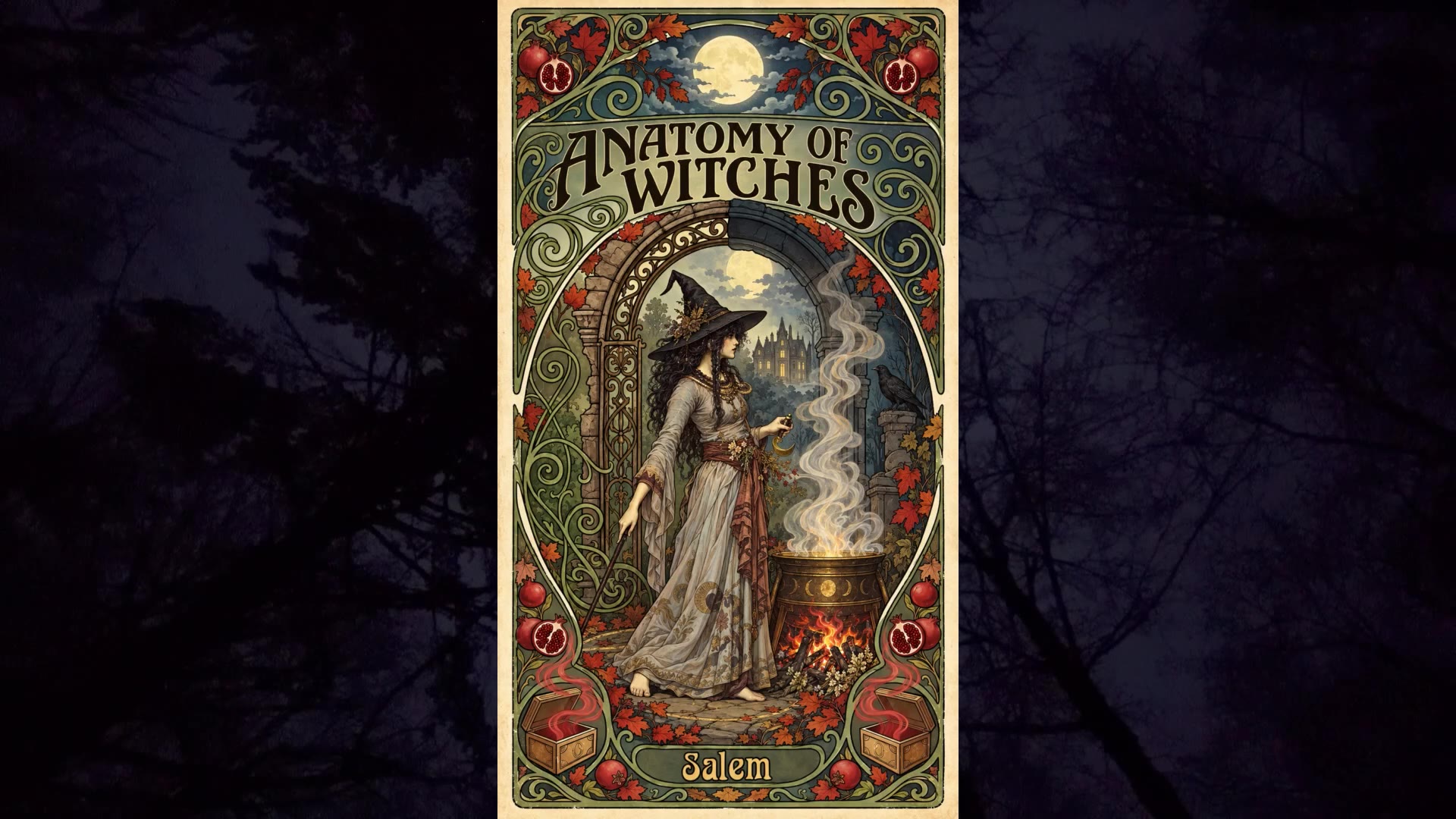
    • The Anatomy of a Witch—light and shadow, grounded in my Salem photographs. What happens when the heroine refuses to behave: Margarita, Diana Bishop, and Maria Owens.
    • Dead Souls: The Light Still Shines—what survives loss, what love cannot rescue, and how we return changed. Christopher Moore’s Secondhand Souls, Gail Carriger’s Soulless, and Anne Rice’s The Feast of All Saints.

    How this runs

    A new piece every week or so, each with a short video on YouTube. Some weeks a close reading, some weeks a craft question, some weeks a book I can’t stop arguing with. Certain books will keep coming back—The Master and Margarita, Good Girls Die Bored, Dexter—because none of them belongs to only one question.

    I’m always pulled toward the newest adventure, the next cycle, because I don’t like regurgitating old processes over and over, writing, editing or reading the same tripe. I want it raw and real, don’t you?

    Subscribe below, if you’d like more from the night scribe, it’ll arrive in your inbox regularly with new publications.

    So, come in from the cold, sit back and enjoy the reel.

    First class: Why Dark Stories Stay With Us.


    Join The Night Scribe

    New Anatomies, first chapters, and stories for after midnight.

  • Why Dark Stories Stay With Us

    Why Dark Stories Stay With Us

    Enter the Shadowed Room

    Some stories do not simply end when the final page turns. They linger in the quiet afterward: a locked door, a name spoken too softly, a love that asks for more than it should. Dark fiction gives us a lantern for those places, inviting us to look closer.

    I’ve always been drawn to that invitation. Raised on girl detectives, mythology, and ghost stories read in an attic armchair, I learned early that curiosity could carry me somewhere unsettling. I wanted to know what waited behind the door, even when the sensible thing would have been to leave it closed.

    The mystery mattered. So did the person reaching for the handle.

    That is where Anya Mari’s world begins: where desire has consequences, magic carries a cost, and beauty is never entirely safe. The shadows interest me because of what people do inside them. What do we protect when we are frightened? What do we excuse when we are lonely? How much of ourselves will we risk to be loved?

    The Pleasure of Unease

    There is a peculiar pleasure in choosing a story that unsettles us. We settle into a comfortable chair, perhaps with a cup of tea, and willingly enter a place we would hesitate to approach in daylight.

    On the page, we can linger. We can follow the sound upstairs, question the charming stranger, or notice how carefully a character avoids saying a particular name. We can also close the book. That distance gives us room to approach feelings we might hurry past elsewhere.

    For me, the fascination lies in contradiction. A house can offer shelter while quietly becoming a trap. A familiar voice can comfort us until we hear what it is asking. An act of devotion can reveal generosity, desperation, or the wish to possess. Or the twisted comfort of possessing something that ultimately destroys. Like Stephen King’s Needful Things. We delight in the experience of deadly obsession. Although it points to a collective societal hoarding instinct, we’re safely gaming from the armchair.

    The uncertainty invites us to participate. We read gestures, reconsider motives, and ask ourselves when we would have recognized the danger. Sometimes we recognize it immediately and understand, with discomfort, why the character stays.

    Dark stories allow that discomfort to remain unresolved for a while. Their characters can want something understandable and reach for it in a way that causes harm. We can feel compassion without deciding that every choice deserves forgiveness.

    The most haunting stories leave a door open somewhere inside you.

    When a House Seems to Want You

    Shirley Jackson’s The Haunting of Hill House gives that open door a deeply unsettling shape.

    Eleanor arrives carrying loneliness and the hope of a life beyond the one she has known. Her longing makes the possibility of belonging intensely powerful. Before we consider what the house might want, we have reason to care about what she wants.

    I read Hill House as offering a terrifying imitation of intimacy. A place that seems to recognize you can become difficult to resist, particularly if you have spent years feeling unseen. Being claimed can begin to resemble being loved.

    That is where the haunting reaches beyond the walls. We need not believe in a conscious house to understand the desire to be welcomed somewhere, or the temptation to overlook what that welcome costs.

    Jackson’s novel is not a conventional romance, but longing gives its horror emotional force. The question that stays with me is painfully human: what if the place that finally makes room for you also threatens to consume you?

    Atmosphere has teeth when it touches a need we recognize.

    What Intimacy Conceals

    Sometimes darkness enters through a familiar front door.

    In The Haunted and the Haunters (The Pirate’s Curse), presented by Alfred Hitchcock, the ghost story becomes an invitation to distrust the surface of things. Its appeal lies in the possibility that the past remains close.

    Here, light takes the form of revelation. We want to discover what haunts a place, but we also want to understand why its darkness holds our attention.

    That curiosity is part of the enduring appeal of suspense. Familiarity promises safety: shared rooms, repeated habits, the belief that we know what surrounds us. A haunting unsettles that confidence. The place we understood seems capable of keeping secrets.

    The connection to intimacy is suggestive: closeness does not give us knowledge. We can inhabit a house, or love another person, while something remains beyond our understanding.

    These stories draw us toward the gap between what is visible and what remains hidden. There is a visual language for that tension, too: chiaroscuro, the interplay of light and shadow. A face half illuminated, a doorway with nothing visible beyond it, a candle that reveals only enough to make us look harder.

    As October darkens, I want to spend more time with that interplay, carrying it into the streets of Salem and the witch stories gathering around the season.

    The Other Side of Darkness Is Love

    Eventually, the question beneath the fear becomes clear: what matters enough that its loss would frighten us?

    A life. A home. A person. The chance to belong. Even the version of ourselves we thought we understood.

    This is where horror and romance meet in the stories that interest me. Both can bring a character to the edge of a familiar life and ask what happens when another presence enters it. Both can make vulnerability feel urgent. The possibility of connection gives the danger something to threaten.

    Their promises differ, of course. A romance offers expectations that a horror story may deliberately unsettle. Yet in Gothic fiction especially, desire and dread can occupy the same room. We may want the encounter even while wondering whether the character should survive it by leaving.

    Anne Rice’s Pandora carries that tension beyond a mortal lifetime. Born into ancient Rome, Pandora tells a story that reaches across centuries. Her connection with Marius, and the immortality she receives from him, place love beside a transformation that changes the conditions of existence.

    Continued life does not settle the difficulties between them. Their turbulent relationship makes immortality an especially revealing setting for questions that ordinary lovers also face: what can endure, what must change, and whether loving someone means we can remain beside them.

    The vampire makes those questions intimate. Hunger and affection inhabit the same body. The promise of forever carries an appetite.

    I find that more compelling than an uncomplicated escape from death. Pandora’s altered existence lets us consider the cost of continuing, and what love can become when the people within it no longer belong to the lives they began.

    What Returns With Us

    Persephone brings us to another threshold.

    Her ancient story begins with abduction, and that matters. In the Homeric Hymn to Demeter, the love driving the search for her is her mother’s. Demeter’s grief and determination make separation a force that reaches across the living world.

    Persephone’s return is partial. Her existence comes to span the world above and the realm below. Read alongside Pandora, the myth opens a question about how a life can continue after an experience that permanently alters its shape.

    Neither story needs to offer a simple lesson about suffering. What interests me is the possibility of return without restoration: coming back while knowing that the old life cannot be resumed exactly as it was.

    Birth, love, death. Descent, loss, rebuilding. We encounter these movements in stories because we are trying to understand them in ourselves.

    As October opens the liminal portal, I want to follow that question into the souls series: what love brings into the dark, what it cannot rescue, and what may yet return. There is room there for ghosts, altered lives, and attachments that outlast the forms we once gave them.

    For now, it is enough to notice why we return to these books.

    The words may be unchanged, but the reader arriving at them has lived another stretch of life. A passage we once hurried through may become the one we cannot leave. A character we dismissed may suddenly seem familiar. The love story may catch our attention where, before, we saw only the haunting.

    Perhaps that is one reason dark stories stay with us. They leave room for the people we are still becoming.

    When we return to the same threshold, are we ever the same person crossing it?


    Join The Night Scribe

    New Anatomies, first chapters, and stories for after midnight.